
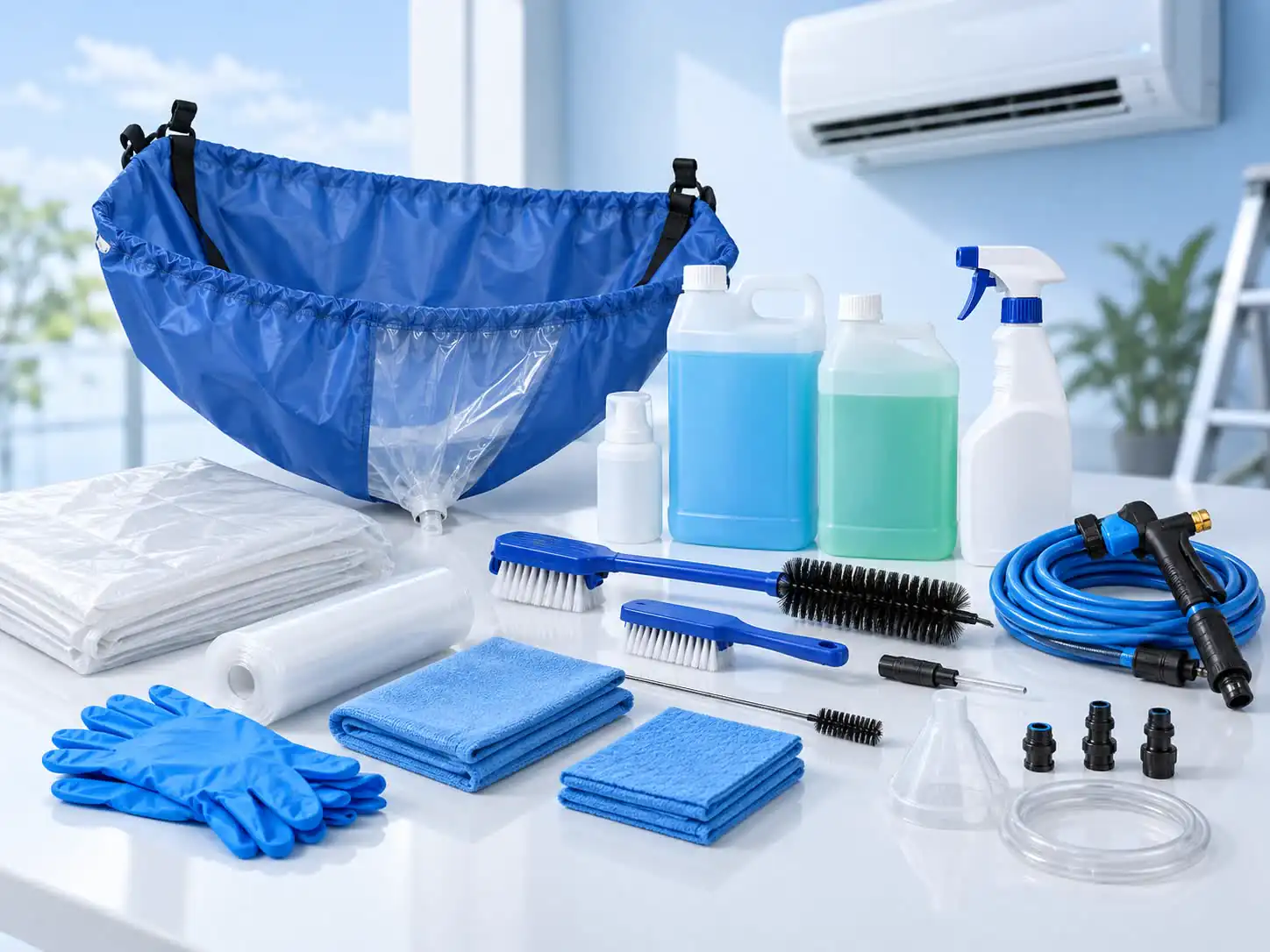
A professional AC cleaning kit is more than a bag of tools. It has to match the units a technician services, contain rinse water, support controlled cleaning, and arrive in a configuration a distributor can reorder consistently. The right contents for a wall-mounted split unit may differ from those for a ceiling cassette or outdoor condenser.
This checklist is for HVAC distributors, private-label buyers, and service managers building a repeatable kit. Use it to define the job first, compare samples, and write a clearer request for quotation. Product photos below illustrate possible components; the final assortment should be confirmed against the equipment and market you serve.
Start with the service application
Before choosing individual items, list the unit types, typical installation heights, access constraints, and cleaning methods in your market. A wall-mounted indoor unit usually needs a fitted water-collection cover and a drain route. A ceiling cassette needs a different cover shape and working clearance. Outdoor condenser work may require a separate brush and rinse setup.
Also decide whether the kit is for routine indoor maintenance, heavy-duty cleaning, or a mixed service route. This prevents a common buying mistake: paying for accessories that rarely leave the case while missing the one connector or drain hose needed on every visit.
1. Contain the water before cleaning begins
Start with a cleaning cover suited to the indoor unit. Compare fit range, fabric and seam quality, fastening method, access around the unit, drain outlet, and hose length. The technician should be able to position the cover securely and direct rinse water into a suitable container without obstructing the work area.
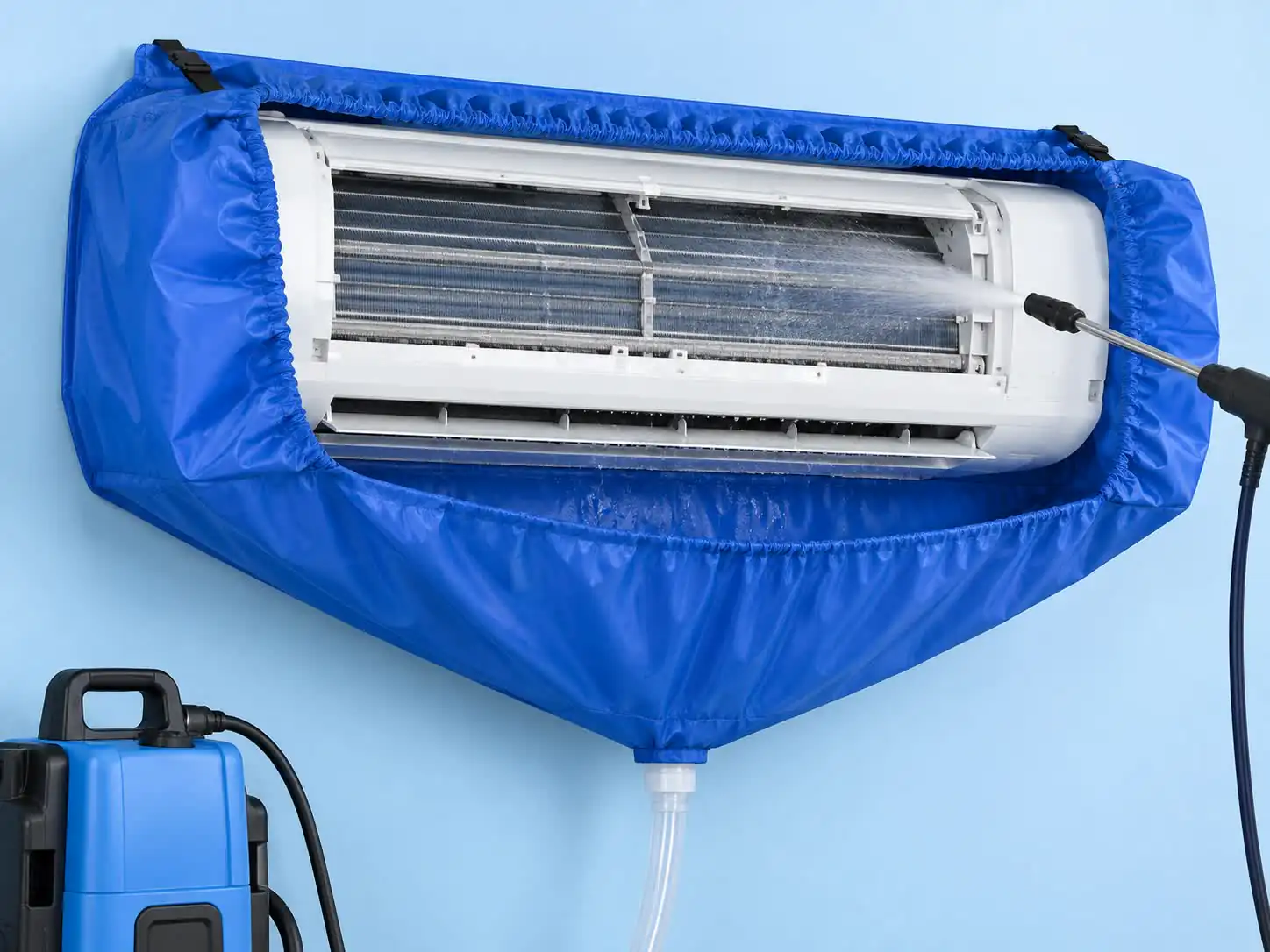
For a distributor range, specify wall-mounted and ceiling-unit covers separately. Record the compatible unit dimensions or circumference rather than calling either option “universal.” Ask for a sample fit check on the models your customers actually service.
2. Match the spray system to the job
A portable pump, hose, spray gun, and suitable nozzle create the rinse system. Compare power supply, hose reach, connector type, spray adjustment, and the control a technician has near delicate fins and electrical components. A more forceful jet is not automatically a better choice: the equipment manufacturer’s cleaning instructions should determine the method used.
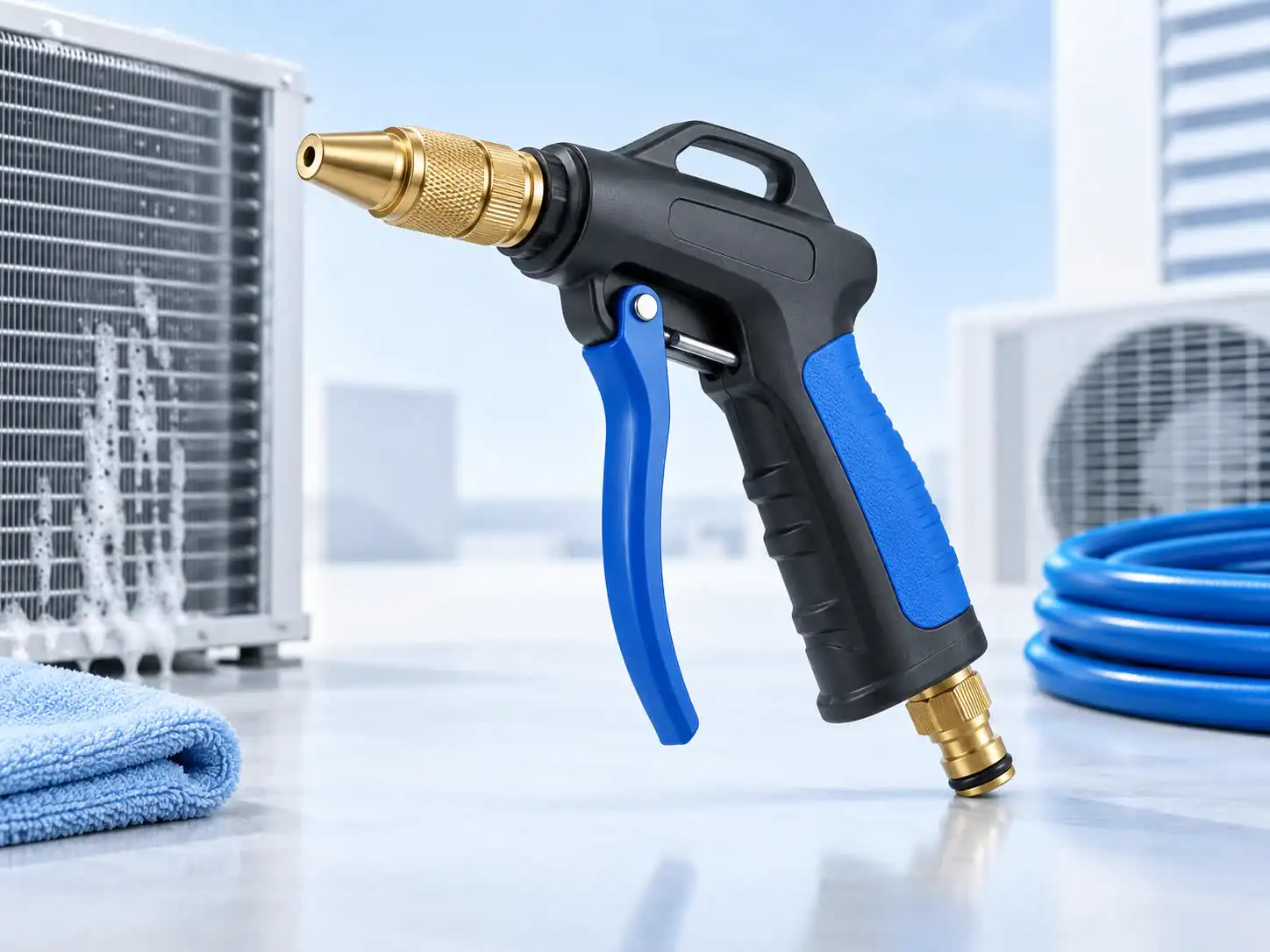
When reviewing samples, assemble the exact pump–hose–gun combination planned for sale. Check for leaks at every connection and confirm that replacement fittings can be sourced for repeat orders.
3. Include tools for contact cleaning and finishing
A small set of brushes with different shapes can help technicians reach filters, blower-wheel areas, narrow gaps, and accessible coil surfaces. Add soft wiping cloths and any required protective film or floor protection. Select bristle stiffness for the surface being cleaned; delicate fins and coatings need particular care.
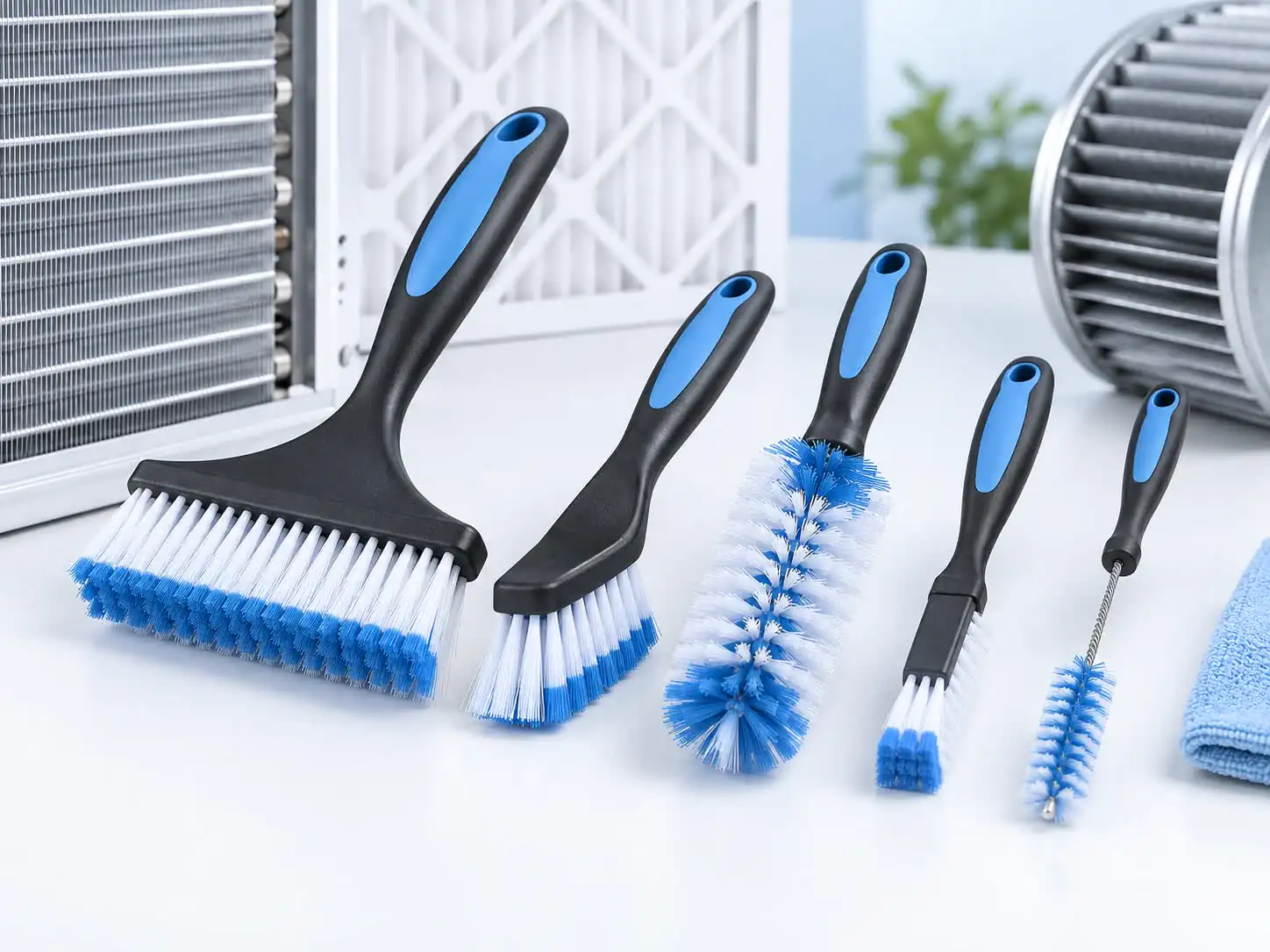
Make consumables easy to replenish. If a brush, cloth, glove, or connector is likely to wear out before the rest of the kit, provide it as a separately orderable component.
4. Specify chemicals by surface, label, and market
A cleaner belongs in the kit only when it is suitable for the intended unit and approved for sale and use in the destination market. Request the product label, safety data sheet, dilution and rinse instructions, packaging details, and compatibility information. Do not treat “coil cleaner,” “disinfectant,” and “deodorizer” as interchangeable claims.
For service teams, the safe working method comes from the unit manufacturer and the chemical label. Include appropriate personal protective equipment in the purchasing specification and check local labeling, transport, and import requirements before finalizing the assortment.
Choose a kit configuration customers can reorder
Starter kit: routine wall-mounted service
A fitted wall-mounted cover, drain hose, basic spray connection, selected brushes, cloths, and protective accessories provide a focused starting assortment. This suits buyers who already own a compatible pump and want a compact replenishment program.
Field kit: an integrated cleaning setup
Add a compatible portable pump, hose, adjustable spray gun, and application-specific cleaning products. Check the packed size and weight, electrical requirements, and whether every included item has a clear role in the service sequence.
Distributor kit: a repeatable private-label range
Start with one approved sample and lock the component list, acceptable substitutions, packaging artwork, labeling, spare parts, and quality checks. A private-label kit succeeds when the next order matches what the distributor demonstrated and sold.
Five questions to include in your RFQ
• Which indoor and outdoor unit types must the kit cover? • What are the required power supply, fittings, hose length, and local plug or labeling requirements? • Which components are reusable, and which must be available as replacements? • What packaging, logo, instructions, and languages are needed? • What sample approval, inspection, target quantity, and delivery schedule will govern repeat orders?
Ask the supplier to return a line-by-line component list with model identifiers, materials, dimensions, and packing quantities. Photos alone are insufficient to lock a repeatable specification.
Evaluate the complete sample before a volume order
Lay out every component and run through the intended service sequence: protect the room, fit the cover, connect the rinse system, clean the accessible surfaces, collect wastewater, and repack the tools. Confirm the connections, cover fit, drain path, instructions, and replacement parts with the people who will use or sell the kit.
Record any changes in an approved specification sheet before placing the bulk order. That document should be the reference for incoming inspection and future reorders.
Frequently asked questions
Does every AC cleaning kit need a pressure washer?
No. The rinse equipment should suit the unit and the manufacturer’s maintenance instructions. For many indoor jobs, control, portability, and water containment matter more than maximum pressure.
Can the same cleaning cover fit wall-mounted and ceiling units?
Usually these are separate cover styles. Compare the unit geometry and dimensions, then verify fit with a sample. A clear compatibility list is more useful to buyers than a broad “one size fits all” claim.
Build the kit around the next service visit
The best assortment is the one technicians can use in a clear sequence and distributors can replenish without surprises. Share your target unit types, destination market, expected quantity, and packaging needs with Jacool to discuss a practical AC cleaning kit configuration.